The state of Nevada just gave Tesla the green light to operate 5,000 autonomous vehicles on its roads. The headlines scream progress. But the question is not about the number of cars. It’s about who verifies the truth of their navigation.
Truth is not given, it is verified. In crypto, we learned that lesson the hard way. The collapse of FTX taught us that trusting a single entity, even with a regulatory stamp, is a recipe for disaster. Tesla’s FSD (Full Self-Driving) is a black box. A neural network trained on millions of miles, but its decision-making process is opaque. The Nevada approval is a regulatory milestone, but it’s built on trust, not cryptographic proof.
I spent 2020 auditing DeFi protocols. I remember staring at the Uniswap V2 whitepaper for months, dissecting every line of code. The liquidity pool logic was elegant, but the real insight was that trust had to be eliminated. Smart contracts couldn’t cheat because the code was verifiable by anyone. That principle is the foundation of decentralization. Now, apply it to autonomous driving.
Context: The Nevada permit is a classic regulatory move. The state allows Tesla to operate 5,000 vehicles, likely with safety drivers, in a defined geofenced area. The exact conditions remain secret. But the deeper issue is that regulators are not equipped to audit a neural network. They rely on Tesla’s internal safety reports, which are black boxes themselves. This is centralization at its finest. A single company controls the data, the model, and the narrative. The autonomous driving industry is repeating the same mistake that led to the 2008 financial crisis: trusting the institution, not the system.
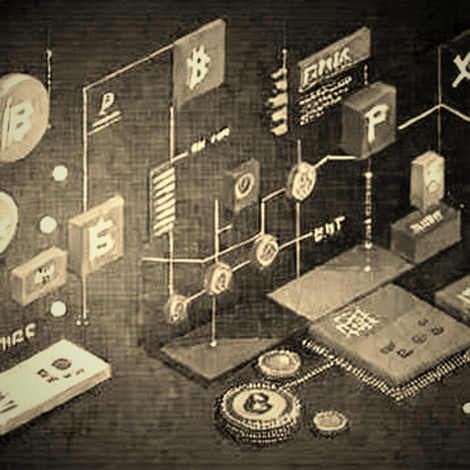
Core: The technical solution is obvious. Blockchain-based verification. Every autonomous vehicle should log each decision — acceleration, braking, lane change — onto an immutable ledger. A lightweight, zero-knowledge proof could allow regulators and the public to verify that the vehicle’s actions were safe without revealing proprietary data. This is not a radical idea. In the bear market, only code remains. We already have the tools: zk-SNARKs for privacy, Merkle trees for data integrity, and decentralized oracles for real-world data.
Based on my experience building a crypto education platform, I’ve seen how smart contracts can enforce rules without intermediaries. The same logic applies to autonomous driving. Imagine a smart contract that holds a stake from the vehicle operator. If the vehicle violates a traffic rule, the stake is slashed and the data is made public. This creates a cryptographic incentive for safety. Tesla’s current approach is the opposite. It’s a closed loop. The company trains its model, deploys it, and only reports aggregate metrics. We cannot verify the individual decisions.
Skepticism is the first step to sovereignty. The Nevada approval should be met with skepticism. It’s a step forward, but in the wrong direction. It reinforces the idea that a single company can be trusted to operate thousands of vehicles without transparent oversight. The regulators are not malicious; they are simply using outdated tools. They approve based on paper submissions and test drives, not on cryptographic proofs.
Contrarian: Let me play the devil’s advocate. Some argue that blockchain adds latency and cost. A real-time autonomous system cannot afford to wait for block confirmations. That’s a valid concern, but it’s a design challenge, not a fatal flaw. Layer-2 solutions like rollups achieve sub-second finality. The real contrarian angle is that this approval might actually slow down innovation. Why? Because it creates a false sense of security. Tesla can now claim it has regulatory approval, which it will use to lobby against more stringent requirements. The company will argue that its system is safe because it passed government tests. But the tests are not rigorous. They don’t require cryptographic accountability.
Modularity is the architecture of freedom. The future of autonomous driving is not a monolithic fleet controlled by one company. It’s a modular network where vehicles from different manufacturers share a common verification layer. Each vehicle is a module that contributes to the network’s security. This is the same philosophy behind Celestia’s modular blockchain. We need a data availability layer for road events. A decentralized proof-of-location.
I spent 2024 analyzing Celestia’s architecture. The insight was that specialization leads to resilience. Similarly, autonomous driving should separate the execution layer (the car) from the verification layer (the blockchain). Tesla could be a great execution layer, but it should not be the sole verifier. The Nevada approval is a missed opportunity to enforce this separation.
Takeaway: The path to true autonomy is paved with cryptographic verification, not government permits. The Nevada approval is a centralized trust trap. It creates a narrative that progress is being made, but the underlying system remains opaque. Builders, start thinking about the consensus layer of the physical world. Design smart contracts that can audit autonomous vehicles. Create oracles that feed road data to on-chain verification systems. The challenge is not building a car that drives itself; it’s building a network that can prove it drove safely.
We do not trust; we verify. The next time you see a headline about autonomous vehicle approvals, ask yourself: Who is verifying the truth? The answer is likely no one. That’s the problem we need to solve.