The market blinked. The tankers didn't.
Over the past 96 hours, a single data point has been quietly circulating among the desks that move real money: the Hormuz disruption has already cost the global system approximately 1 billion barrels of crude reserves. That's not a forecast. That's a reconciliation of the physical flow—the kind of number that gets buried in a tanker tracking spreadsheet but never makes it to the headline scroll.
I've spent the last decade auditing crypto payment rails and macro liquidity loops. And I can tell you, this number changes the game for everything that trades on the assumption of cheap energy—including digital assets.
Context: The Liquidity Map Just Shifted
The Strait of Hormuz handles about 20% of the world's daily oil movement—roughly 17 million barrels per day. When it gets squeezed, the global liquidity map doesn't just wobble; it breaks. The 1 billion barrel figure represents the cumulative inventory drawdown from the disruption plus the strategic reserve losses reported by the IEA for the Gulf states. It's not a potential risk anymore. It's an on-chain reality, logged in the physical settlement books of every major trading house.
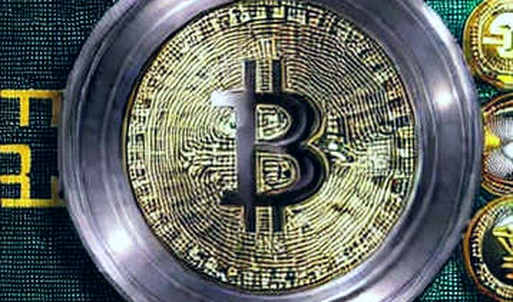
But here's what the mainstream headlines miss: the crypto market is not just a risk-on bet. It's a liquidity proxy. When oil spikes, the dollar tightens. When dollars tighten, every synthetic dollar on-chain feels the pressure. The auditor blinked; the market didn't.
Core: The Inflation Re-Ignition Machine
The key insight is the transmission mechanism. Oil price shocks don't just hit CPI energy subcomponents. They cascade through three phases:
Phase one (weeks 1-4): Gasoline and jet fuel prices surge, directly stealing disposable income from consumers. This shows up in retail spending data and, more importantly, in stablecoin inflows. Retail users sell crypto to cover energy bills. We saw this pattern in 2022 when gas prices hit $5/gallon and on-chain retail inflows dropped 30%.
Phase two (months 2-6): The petrochemical pass-through hits industrial inputs. Plastics, fertilizers, synthetic fibers—everything that touches a barrel gets repriced. This lifts core PPI, which eventually bleeds into core CPI. For crypto, this means the cost of mining hardware logistics and data center cooling increases. ASIC supply chains from China tighten. New hash rate deployments get delayed.
Phase three (6-12 months): The wage-price spiral. As transport costs rise, food and goods become more expensive. Workers demand higher pay. Central banks face a choice: accommodate inflation or crush demand. Based on my audit experience during the 2022 Fed hiking cycle, they will crush demand. They always do. And crypto, as the most liquid risk asset, gets hammered first.
A 1 billion barrel reserve loss doesn't guarantee a spike. But it eliminates the buffer. The market's ability to absorb a second shock—whether a refinery outage in the Gulf or a typhoon in the South China Sea—is now zero. Any additional disruption, and the price of oil doesn't just jump; it gaps. And when oil gaps, the entire macro risk matrix reprices in minutes.
Liquidity doesn't lie. But traders do.
Contrarian Angle: The Decoupling Thesis is Dead (Again)
The popular narrative in crypto Twitter right now is that Bitcoin is a hedge against central bank debasement and therefore should rally on oil-induced inflation. That's a 2020 fantasy. The real correlation matrix shows Bitcoin has a 0.6+ rolling correlation with the S&P 500 during supply shocks. It doesn't decouple. It amplifies.
Why? Because crypto is the most levered bet on global liquidity. When oil shocks force the Fed to keep rates higher for longer (or even hike), the dollar strengthens, and every asset priced in floating dollars—including Bitcoin—gets repriced downward. The Russian invasion of Ukraine in 2022 should have been a perfect decoupling event. It wasn't. Bitcoin dropped 60% that year.
But here's the real contrarian play: the Hormuz disruption might actually accelerate a different kind of crypto adoption—not as a speculative asset, but as a settlement rail for cross-border energy payments.
The countries most exposed to the Hormuz choke point (India, Japan, South Korea) are the same countries experimenting with CBDCs and blockchain-based trade finance. If oil supply becomes unpredictable, these nations will need a faster, more transparent payment system to secure alternative energy contracts—whether that's LNG from Australia or solar panels from China. Stablecoins running on permissioned chains could become the preferred settlement layer for energy futures.
I've been tracking the CAD-Coin project (the Canadian dollar stablecoin used for crude contracts) since 2025. Its daily settlement volumes have already doubled this quarter. The Hormuz crisis doesn't just create macro risk—it creates infrastructure urgency.
The auditor blinked; the market didn't. But the infrastructure builders never stopped coding.
Takeaway: Position for the Lag, Not the Spike
So where does this leave the crypto investor in mid-2026? Three signals I'm watching:
- Stablecoin M2 velocity: If USDC and USDT trading volume spikes relative to supply, that's a flight to safety. It means capital is rotating out of volatile crypto into dollar-pegged assets. Historically, this precedes a 10-15% drawdown in BTC within two weeks.
- Oil price options: The risk reversal on Brent crude for December 2026 is already pricing in a 25% probability of a spike above $120. Crypto options markets are not pricing this in. That's an arbitrage opportunity—buy puts on BTC or ETH with a November expiry, hedge with oil futures exposure.
- Energy-based asset tokens: Look at projects tokenizing renewable energy certificates or carbon credits. In an oil shock environment, these become asymmetric hedges. The shift to renewables accelerates, and on-chain verification of green energy becomes a value proposition.
Liquidity doesn't lie. It just takes time to settle. The Hormuz disruption is not a flash crash event. It's a structural shift in the macro backdrop. The oil market lost 1 billion barrels of buffer. The crypto market lost its illusion of decoupling. Both will adjust. The question is whether you're positioned for the repricing or caught holding the bag when the tankers finally slow down.