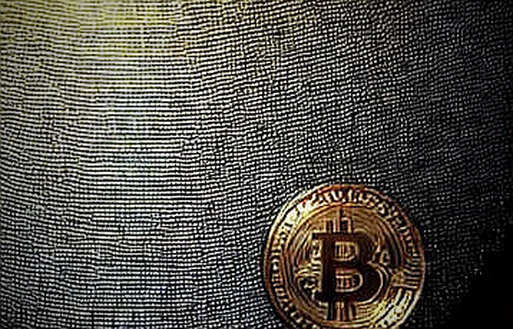
Over the past 48 hours, a ripple moved through the market. Bitcoin shed 3% from its local range. Oil futures climbed 5% on renewed geopolitical premium. The catalyst? A single, unverified report from Crypto Briefing claiming that the Trump administration has a plan to strike Iran's 'Pickaxe Mountain' facility by 2026. The market didn't audit the source. It reacted to fear.
Let’s pull the threads of provenance. The article was published on a crypto news site—hardly a primary source for military intelligence. Its entire payload is a geostrategic scenario wrapped in a geopolitical headline. No named officials, no leaked cables, no signal intercepts. Just a future date and a code name that echoes deep-buried nuclear sites like Fordow or Parchin.
I have spent years auditing smart contracts for integer overflows—vulnerabilities hidden in plain sight. The same discipline applies here. What I find is a structural deficit in trust. The report offers no evidence chain, no cryptographic verification, no secondary source corroboration. It is a single-pipeline oracle feeding into a system that values speed over veracity.
The market, however, did not pause to verify. It moved on the narrative alone. This is the fragility we see in DeFi: protocols that rely on a single price feed without running a simulator for flash loan attacks. Here, the oracle is a website, and the price movement is fear. I do not trust the silence, I audit the code. In this case, the code is the report itself, and it fails every audit check.
Now consider the contrarian signal. If this report were a deliberate information operation—a trial balloon floated to gauge global reaction—it would explain the lack of specifics. The goal is not to inform, but to condition. To test how markets, adversaries, and allies respond to the idea of a high-risk strike. The 2026 timeline is perfect for disinformation: too distant for immediate fact-checking, yet close enough to anchor expectations. Truth is an oracle, not a price feed. The market’s movement is not a validation of the news, but a data point for the adversary.
What does this tell us about the structural survivalism of crypto markets? When panic trades hit, liquidity pools thin. Stablecoin anchors wobble. The very mechanisms designed for decentralization can become conduits for contagion if the underlying information layer is corrupted.
From my work modeling Compound’s oracle risks in DeFi Summer, I learned that fragility hides in the single point of failure. Here, the single point is trust in a low-credibility media outlet. The market is essentially buying a narrative without a decentralized verification layer. We have built trustless financial primitives, but we still rely on centralized information filters.
The counterintuitive play: when the noise spikes, the opportunity lies in doing the audit. Identify the source’s math. Does it add up to a coherent probability? Check the background: the reporter has no military beat credibility. The site has no track record of breaking national security stories. The article contains zero on-the-record sources. This is not a signal; it is signal-to-noise ratio approaching zero.
A mature DeFi investor would not ape into a yield aggregator without reviewing its smart contract code. Why would the same investor bet portfolio allocation on an unverified headline? The answer lies in human psychology: we are wired to overweight sensational threats. The market is just a mirror of cognitive bias.
Looking forward, this event underscores the need for on-chain truth mechanisms. Imagine a decentralized oracle that collects verification signals from multiple domains—military, diplomatic, economic—and produces a confidence score for geopolitical claims. The same logic that powers Uniswap V4 hooks could power information verification hooks. Until then, the reflex reaction to headlines will remain a vulnerability.
Proof precedes value; provenance is the only art. The next time you see a spike on a cryptic news feed, ask: what is the underlying data structure? Who signed the message? Where is the chain of custody? If you cannot answer those questions, your portfolio is exposed to a different kind of flash loan—one that extracts liquidity from your fear.
The Pickaxe Mountain report may be fiction, but the market's response is real. That gap is where the real analysis begins.