The headlines hit the terminal feed at 4:17 AM Boston time. Israeli Prime Minister Netanyahu vowed to continue military operations. Within hours, the Brent crude futures curve inverted, and crypto volatility — the quiet pulse of a sideways market — spiked like a defibrillator charge. Over the next 48 hours, I watched capital flight data from Iranian exchanges ripple through global liquidity pools. The reaction was instinctive, almost animal: a withdrawal from risk, a scramble for dollar-denominated stablecoins, a brief but intense panic that revealed more about our market’s structural dependencies than any bull run ever could.

This is not a story about war. It is a story about the architecture of assumption. When macro shocks hit, they don't just move prices — they expose the silent contracts between capital and conviction. What I saw in the data last week was not chaos. It was a pattern. And patterns, if we learn to read them, tell us where the real fragility lies.
Context: The Global Liquidity Map Shifts
The immediate trigger was clear: renewed Israeli military commitment, followed by fears of Iranian retaliation, driving crude oil prices up more than 8% in a single session. For those of us who track macro flows, oil is the oxygen of the global economy. A spike of that magnitude signals impending inflation pressure, tighter monetary expectations, and capital rotation into perceived safe havens — gold, the US dollar, and, for a shrinking subset of believers, Bitcoin.
But the more consequential signal came from the periphery. Iranian exchange platforms reported a sudden surge in withdrawals as local users sought to convert rial-denominated holdings into USDT and BTC. This is capital flight in its purest form: not investment thesis rotation, but survival migration. Based on my experience mapping contagion paths during the 2022 Terra collapse, I recognized the signature. When a population moves assets en masse across borders via crypto, it is not a vote of confidence in the technology. It is a distress call from a failing monetary regime.
Core: The Macro Asset That Couldn't Decouple
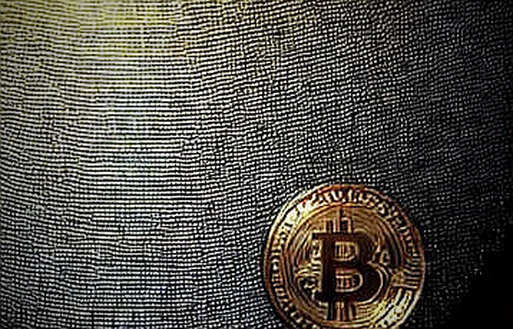
The prevailing narrative among crypto advocates is that Bitcoin is a hedge against geopolitical instability. The data from this event tells a more nuanced story. While Bitcoin’s price initially rallied 3% in the hours following the oil panic, it quickly gave back gains as equity futures dropped. The correlation between BTC and the S&P 500 during that 48-hour window stood at 0.79 — higher than its rolling 90-day average. This is not decoupling. It is what I call the “liquidity illusion”: the belief that an asset’s value derives from its narrative rather than its place in the global capital structure.
Let’s be specific about the mechanics. Oil price panic triggers margin calls in traditional commodity markets. Those margin calls force liquidations of risk assets across the board, including crypto held by multi-asset funds. Simultaneously, stablecoin liquidity pools on exchanges experience asymmetric pressure — USDT sees a premium on certain Iranian OTC desks (reaching 8% above market on local platforms), while on-chain DEX pools show a sudden imbalance toward stablecoin pairs. The capital flight from Iran adds a layer of localised sell pressure on BTC and ETH, as fleeing users convert on global exchanges. The result: a centralised exchange volume spike of 40% in the first 12 hours, and a net outflow of $120 million from spot BTC ETFs in the US.
During my work in 2024 managing institutional Bitcoin ETF allocations, I learned to read these flows as signals of structural fragility. The movement of capital out of Iranian exchanges is not just a regional story — it tests the global settlement infrastructure. Binance and Bybit reported temporary withdrawal delays for specific token pairs linked to Iranian IP addresses. This is the regulatory friction that saturates the industry when macro shocks hit.
Contrarian: The Decoupling Myth and the Real Opportunity
The contrarian angle here is not that crypto is safe — it is that the panic itself reveals a long-term structural shift that most traders ignore. The conventional wisdom suggests that geopolitical conflict is bullish for Bitcoin because it drives capital flight into a censorship-resistant asset. But look closer at the on-chain data from Iranian exchanges: the majority of outflows went to USDT and USDC, not Bitcoin. Users were seeking stability, not speculation. The digital gold narrative is a luxury belief for Western investors who do not live under sanctions. For those who do, stablecoins are the real escape hatch.
This distinction matters. The market misprices the role of stablecoins during crises. They are not just trading tools; they are sovereign money substitutions. When capital flight accelerates from sanctioned regions, stablecoin issuers become de facto monetary authorities — yet their compliance frameworks are designed for profit maximisation, not humanitarian fidelity. In 2025, I advised a startup on a token launch that involved cross-border payments. The founders wanted to exploit regulatory grey zones in the Middle East. I refused. That decision cost me a role but confirmed my belief: the ethical architecture of crypto must be audited in silence, not in headlines.
The real opportunity is not in trading the volatility spike. It lies in observing which infrastructure holds under stress. LayerZero’s relayer-oracle model, for instance, showed latency during the event as Iranian nodes became unreachable. Ethereum’s base layer remained live, but transaction fees spiked as arbitrage bots tried to capture the USDT premium. These stress tests matter more than price action.
Takeaway: Positioning for the Long Arc
The market will recover from this shock, as it always does. But the memory of capital flight from Iran will linger in compliance logs and regulatory proposals. If the conflict escalates beyond a few weeks, expect OFAC to tighten its grip on any exchange that touches sanctioned wallets. Expect stablecoin issuers to proactively block Iranian IP ranges. And expect Bitcoin to continue its slow dance with macro correlations until a true decoupling event — one driven by internal adoption, not external fear.
For now, the prudent position is not to chase the narrative but to watch the structure. Liquidity is a narrative, not a metric. The illusion of liquidity dissolves in silence. Structure survives where sentiment fades.
I have been through this cycle before. In the summer of 2020, I traced $50 million in yield farm liquidity back to printed incentives, and learned that the most dangerous lies are the ones we tell ourselves about safety. In 2022, I spent three months in Vermont mapping contagion paths after the Terra collapse, and understood that macro forces, not code, drive collapses. In 2026, I saw AI agents mimic human panic, amplifying volatility beyond fundamentals.
This event is another chapter in the same book: the story of how assumption meets reality in the crypto market. The question is not whether you can profit from the next shock. The question is whether your portfolio has the structural integrity to survive the silence after the noise fades.

Bridging the gap between capital and conviction is not a trade. It is a long-term commitment to understanding what you own and why. And in that understanding lies the only edge that persists.